
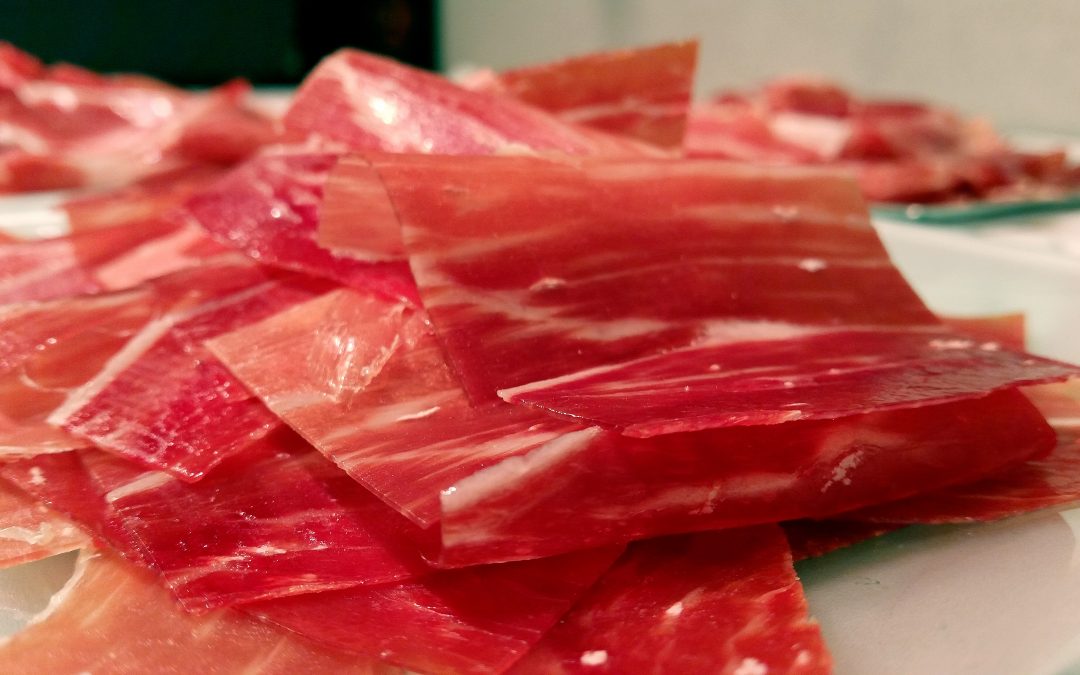
What exactly is “Pata Negra” and what does the official regulation say?
The term “Pata Negra” is probably the most famous and evocative expression of Spanish gastronomy internationally. It is immediately associated with the highest quality, exclusivity, and a sublime flavor. However, for many years, this term was used ambiguously and often confusingly in the markets. To protect the
To protect consumers and preserve the value of this gastronomic heritage, the Government of Spain approved in 2014 the Quality Standard for Iberian Ham (Royal Decree 4/2014), which strictly regulates labeling and legally defines for the first time what an authentic pata negra ham is.
According to current law, only ham that simultaneously meets two fundamental and indispensable conditions can be labelled as “Pata Negra”: first, the pig from which it comes must be 100% purebred Iberian (that is, both the father and mother must be registered in the Iberian breed studbook); second, the animal must have been raised free-range in the dehesa (pastureland) and fed exclusively on acorns, grass, and natural resources during its montanera (acorn season). Any ham that does not meet these two requirements, even if it has
The black hoof cannot be legally advertised as such.
The meaning of the black ribbon on Iberian ham
To facilitate identification by consumers and prevent fraud when buying Iberian ham, state legislation introduced a system of tamper-evident colored seals or tags that are placed on the shank of each ham and shoulder at the slaughterhouse. These tags come in four colors and indicate with complete precision the category of the piece being purchased:
- Black Label: Reserved exclusively for 100% Iberian acorn-fed ham. That is, the authentic “Pata Negra”. It is the undisputed pinnacle of quality.
- Red Label: Indicates that it is an Iberian acorn-fed ham, but from animals that have 75% or 50% racial purity (generally crossed with Duroc breed pigs).
- Green Label: Identifies Iberian free-range acorn-fed ham, which can have different percentages of racial purity.
These animals are raised in open-air plots, but their diet combines natural pastures and high-quality feed. quality.
- White Label: This corresponds to Iberian grain-fed ham. These pigs are raised on intensive farms and fed exclusively on feed made from cereals and legumes.
When looking for genuine pata negra ham, the black seal with the logo of the Interprofessional Association of Iberian Pork (ASICI) is your ultimate guarantee of authenticity. Don’t be guided solely by the physical color of the hoof, as there are breeds of white pigs that also have dark hooves, and purebred Iberian pigs that occasionally have them.
They may have light-colored hooves.
Difference between acorn-fed ham and free-range grain-fed ham
One of the most frequent questions among consumers is understanding the difference between acorn-fed and grain-fed (or free-range) Iberian ham. The key lies in two aspects: the animal’s diet and freedom of movement during its final months of life. Acorn-fed Iberian ham comes from pigs that have lived completely freely in the dehesa (pastureland) during the montanera (acorn season), feeding on acorns and grass, doubling or even tripling their initial weight naturally. This style
An active lifestyle and a diet rich in acorns give the ham a smooth texture, a sweet taste and an intoxicating aroma that is inimitable.
In contrast, free-range acorn-fed ham comes from animals that, while having outdoor space to exercise, base their diet primarily on authorized compound feed. Although it is an excellent quality product with superb fat marbling, it lacks the aromatic bouquet and nutritional benefits (oleic acid) provided by acorns. This explains why acorn-fed ham is considered superior both organoleptically and in terms of flavor and texture economically.
Nutritional properties and health benefits of acorn-fed Iberian ham
Besides being an exquisite delicacy, authentic acorn-fed Iberian ham offers remarkable nutritional properties that make it a formidable ally for a balanced and healthy diet. Thanks to the massive consumption of acorns during the montanera (acorn season), the fat of these pigs is composed of more than 55% oleic acid, a monounsaturated fatty acid identical to that found in olive oil. This type of fat helps raise levels of good cholesterol (HDL) in the blood and reduce bad cholesterol (LDL), actively contributing to protecting cardiovascular health.
Furthermore, Iberian ham is an excellent source of high-biological-value protein, essential for proper muscle development and maintenance. It is also rich in B vitamins (especially B1, B6, and B12), crucial for the nervous system, and vital minerals such as easily absorbed iron (ideal for preventing anemia), zinc, magnesium, and phosphorus. Its moderate sodium content, thanks to modern curing techniques that use less salt than in the past, makes it suitable for regular consumption as part of a healthy lifestyle.
Key factors that influence the price of Pata Negra acorn-fed ham
When analyzing the best price of pata negra ham, it’s impossible to ignore that it’s a high-cost product. However, this price reflects the laborious and lengthy process required to produce each piece. From the birth of the 100% Iberian piglet until the ham reaches the market, between five and seven years can pass. This cycle encompasses the maintenance of the dehesas (a protected and limited ecosystem), the individualized care of the animals, the risk posed by weather conditions that determine the acorn harvest each year, and finally, a patient curing process in the cellar that lasts from three to five years.
Scarcity is another crucial factor: the Spanish dehesa is a limited resource and can only support a certain number of pigs per hectare to ensure a proper montanera (acorn season). Therefore, the volume of authentic ham is limited.
Pata Negra is produced annually in limited quantities. When you acquire this gem, you are not only paying for the meat, but also for the preservation of a centuries-old tradition, the sustainability of rural Spain, and a flavor that is rightfully considered a part of humanity’s heritage.