
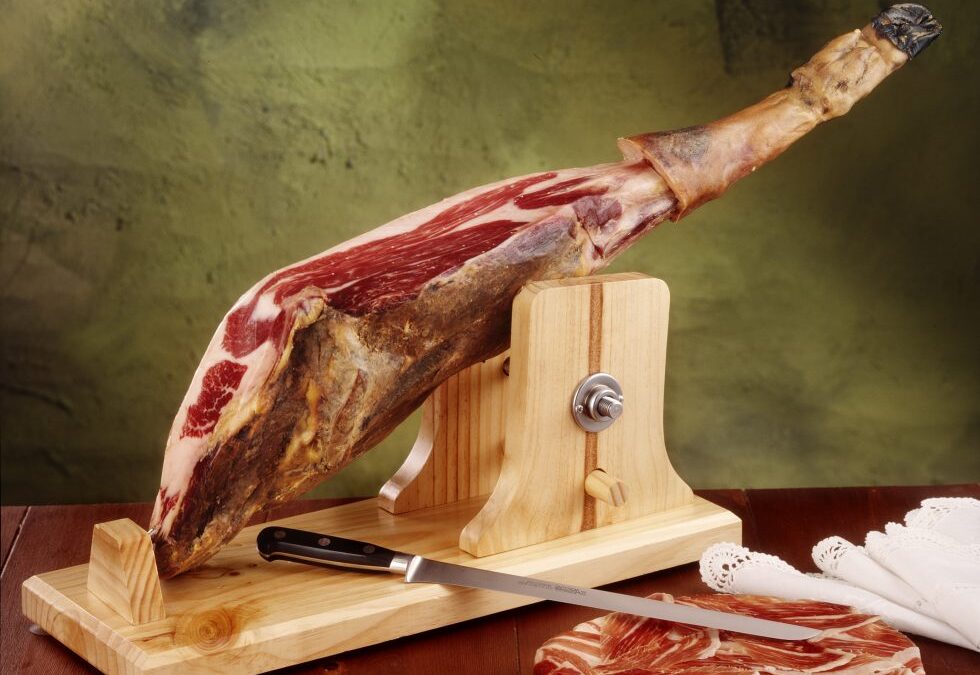
The origin of Serrano ham: From the white pig to your table
Ham is, without a doubt, the star and most beloved product of Spanish gastronomy, consumed daily in millions of homes. Within the large family of cured meats produced in Spain, Serrano ham stands out.
It occupies a privileged place due to its excellent value for money and its deep-rooted popular tradition. The term “serrano” comes from the word “sierra” (mountain range), alluding to the historical custom of curing hams in the high, cold mountain areas, where the cool, dry climate favored a slow and natural maturation of the product.
Unlike Iberian ham, Serrano ham comes from what is known as white ham, meaning pigs of non-Iberian breeds. These animals are typically raised in intensive farming systems and fed high-quality cereal-based feed. Although it is a more affordable product, the production of Serrano ham in Spain is subject to rigorous quality controls and enjoys the protection of the Traditional Speciality Guaranteed (TSG) designation at the European level, a seal that ensures the ham has been produced following the traditional method and respecting the minimum curing times required by law.
Classification by curing times (Bodega, Reserva and Gran Reserva)
Not all Serrano hams are the same; their flavor, aroma, and texture depend directly on the time they have spent curing in the drying sheds. When buying Serrano ham, it is essential to look at the designation on the label, which refers to the minimum curing period of the ham.
- Serrano ham from Bodega or Cava: This is the most basic category, with a curing period ranging from 9 to 12 months. Its flavor is mild, and the meat is more tender and less structured.
- Serrano Reserva (or Añejo) Ham: This refers to hams that have been cured for between 12 and 15 months. It has a slightly more complex flavor and a firmer texture.
- Gran Reserva Serrano Ham: It is the crown jewel of the white pig. These hams enjoy a period of
The curing process exceeds 15 months, and in many cases can reach 18 or 24 months. Due to this prolonged curing time, Gran Reserva Serrano ham develops a much more intense, deep, and aromatic flavor, with a lower water content and an ideal texture for slicing thinly.
For those consumers looking for a superior quality Serrano ham that evokes the traditional flavors of artisan curing, the Gran Reserva option is, indisputably, the best choice on the market.
Main breeds: Landrace, Large White and Duroc
Serrano hams come from various breeds of white pigs, each of which contributes specific characteristics to the meat. The three most widely used and important breeds in the Spanish industry are:
- Landrace: Of Danish origin, it is characterized by producing very lean and tender meat, with excellent yield. It is one of the most valued breeds for the production of cured ham for daily consumption.
- Large White: Originating in the United Kingdom, it is a very rustic and resistant breed that stands out for its juiciness and its ability to adapt to different climates, resulting in very balanced and homogeneous hams.
- Duroc: Originating in the United States, this breed is of enormous importance in the sector. Duroc pigs have the unique characteristic of developing intramuscular fat infiltration similar to that of Iberian pigs. For this reason, they are frequently crossbred with Iberian pigs and are the preferred breed for producing the highest quality Gran Reserva Serrano hams, as they impart exceptional juiciness and marbling to the meat.
Key differences between Serrano Ham and Iberian Ham
It’s common for consumers to wonder what the real difference is between Serrano and Iberian ham. Although both products are delicious and share a similar curing process involving salting and drying, there are substantial differences that justify the difference in category and price:
Firstly, the breed is the main differentiating factor: the Serrano comes from white pigs (Landrace, Duroc, etc.),
While Iberian ham comes from Iberian pigs, a breed native to the Iberian Peninsula, their diet and rearing methods differ significantly. White pigs are raised on farms with cereal-based feed, while acorn-fed Iberian pigs roam freely in the dehesa (pastureland), feeding on wild fruits and acorns during the montanera (acorn season). Finally, the curing time for Iberian ham is much longer, requiring a minimum of 24 to 36 months, compared to the usual 9 to 15 months for Serrano ham. This results in two completely different sensory profiles: Serrano is saltier, leaner, and more straightforward, while Iberian is sweeter, more unctuous, complex, and aromatic.
Nutritional properties and gastronomic versatility of Serrano ham
From a health perspective, Serrano ham has remarkable properties. It’s a food with a high content of high-quality protein, essential for muscle regeneration, and has a moderate calorie content if the visible fat is removed. It’s rich in B vitamins (especially B1, B3, and B6) and provides essential minerals such as iron, zinc, phosphorus, and potassium. As a natural source of easily digestible energy, it’s an excellent food for athletes, growing children, and people on weight-control diets.
Furthermore, Serrano ham stands out for its tremendous versatility in the kitchen. See here hoy to buy Serrano Ham at best price!
Use it not only as an individual appetizer, but also as a star ingredient in countless traditional Spanish recipes: from classic Serrano ham croquettes and broken eggs with potatoes to Cordoban salmorejo and sautéed peas. A good Serrano ham, sliced thinly or diced, is a surefire way to enhance the flavor of any dish and add a touch of authenticity to your table.